Step 6: Employee Empowerment

What is employee empowerment? HRZone (www.hrzone.com) defines employee empowerment as “… a management strategy that aims to give employees the tools and resources necessary to make confident decisions in the workplace without supervision. “  So what does this mean to you and your organization and how does it relate to your Customer Service Vision (CSV)?

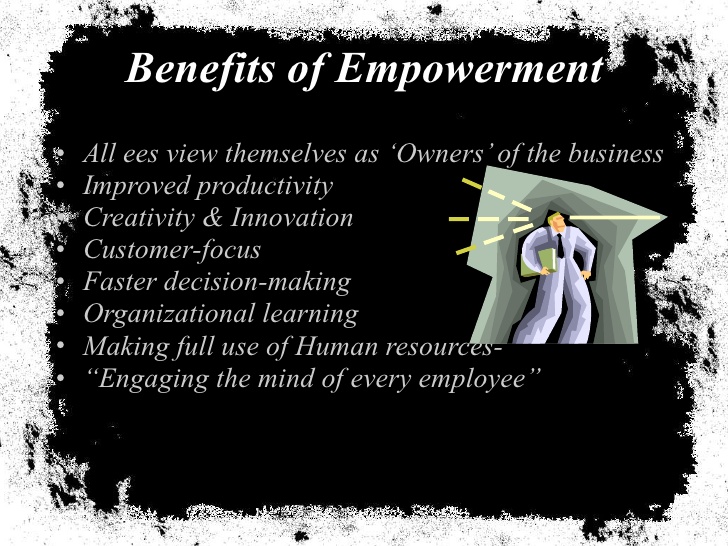
Front line staff needs not only the freedom to make decisions in the execution of their assignments but they also need management to support those decisions,  They need an environment that supports independent decision making within established guidelines. For example a CSR needs the flexibility to ship a replacement part overnight rather than the prefered 2-day delivery if she feels the situation requires immediate action,  

There are some tangible benefits to empowering your employees: greater job satisfaction, improved workflow, greater motivation and increased accountability.

There are some drawbacks to empowerment you should consider. Greater autonomy can lead to risk taking as employees begin to redesign procedures and practices and there is some security risk with the dissemination of important information required for independent decision making.

Empowering your employees, while coming with some risk, will benefit your organization. The combination of more satisfied and productive employees coupled with greater customer satisfaction is bound to improve your bottom line.

Check out this video on actual and psychological empowerment by customer service expert Adam Toporek.

Step 4: Training

Have you ever tried to purchase a good or service and the sales person did not know that product or service at a deep level?  Frustrating isn’t it? How can an organization sell their product or service when their sales/support staff don’t know or understand what they sell or support?  It seems like a no brainer for sales/support staff to really know what they are selling or supporting. Sadly, this is not always the case.

Your staff members who have contact with customers need to have extensive product knowledge. They must be able to explain the product or service in detail, answer questions, even some technical ones and make recommendations for another product or upgrades to an existing product. 

Your staff needs more than just product/service training, they also need soft skills training.  Not every staff member communicates as effectively as they should, a few don’t really listen and still others lack empathy. Support staff especially must have the ability to solve problems and remain diplomatic in trying situations.  Essential soft skills for every sales/support person include:

  • Communication skills: active listening, good verbal communication, good written communication including proper grammar and punctuation.
  • Emotional Intelligence: empathy, self-motivation, self-regulation, positive attitude.
  • Conflict resolution: diplomacy, accountability, empathy, assertiveness, humor.

Your organization will benefit from a well trained sales/support staff with increased sales and improved customer satisfaction.  Training is an investment in your people and your organization.  For a list of FREE training resources, go to: www.customerserviceimprovement.com and click on Free Resources.

Step 3: Spread the Word (Communicating the Vision)

You’ve collected the relevant documents, gathered input from employees and then spent hours writing a Customer Service Vision statement.  Now what?

Communicating your Customer Service Vision is your next step.  As you develop the roll out keep these points in mind: your staff needs to understand what the Vision is, what it means to the organizations, how they as individuals can contribute and what is expected of them as employees. 

Include relevant examples, perhaps review a recent service failure. Ask your staff how they would use the Vision to achieve a better outcome for the customer.  

Stories are a great vehicle for learning new concepts. Create a story that illustrates how to use the Vision to solve complex problems or high maintenance customers.  Make your story as rich and full, as well as relevant, as possible. Your efforts will help ensure your staff fully understands the Vision and its implementation.

Role playing is another great strategy for communicating the Vision. Role play a particularly difficult or demanding customer. Have employees play the part of the customer while another employee works to resolve their issues, concerns or product usage questions.

 Post the Vision where it can clearly be seen like employee break rooms or near the time clock. Communicating the Vision does not end here, this is only the beginning. The Vision needs to be constantly re-enforced, the post on Leadership will address this concept more fully.


Step 2: Writing the Customer Service Vision Statement

What in the world is a Customer Service Vision Statement?  Good question. Jeff Toister the author of The Service Culture Handbook defines a customer service vision statement as:

 “A customer service vision is a statement that clearly defines the type of customer service employees are expected to provide.

Your Customer Service Vision (CSV) statement can be a stand alone statement or it can be an integral part of your company’s mission or vision statements.  There can be a company wide CSV and CSVs for individual departments. We will be focusing on a company wide CSV.

Let’s assume that you do not have a CSV and that your Mission and Vision statements really won’t double as a CSV, so where do we start? 

  1. Gather any relevant documents: Mission and Vision statements, quality slogans, even marketing pieces.
  2. Talk to employees, get their input on what customer service means to them and how they would like to serve customers. Jeff Toister suggest asking your employees: “What do you want our customers to think of when they think of the service we provide?”
  3. This is a good time to discover “pain points” in the customer service process which may be vital to the effectiveness of the vision.
  4. Keep these three ideas in mind as you craft your vision: a) is the vision simple and easy to understand, b) does it accurately describe the service we provide for our customers, c) it reflects who we are and what we aim to be.

Writing a customer service vision statement is not easy.  The writing does take time and effort. Don’t expect to finish in one sitting.  Set your initial statement aside for a few days then return to it. Does it really say what you intended? Does it match the 3 key ideas in the above paragraph?

Have staff, employees, and maybe even family members read your statement, multiple viewpoints will assist in creating a great Customer Service Vision statement.

For a complimentary discovery session to determine how you can improve customer service, click the link: https://www.customerserviceimprovement.com/coaching

Step 1: Define Your Culture

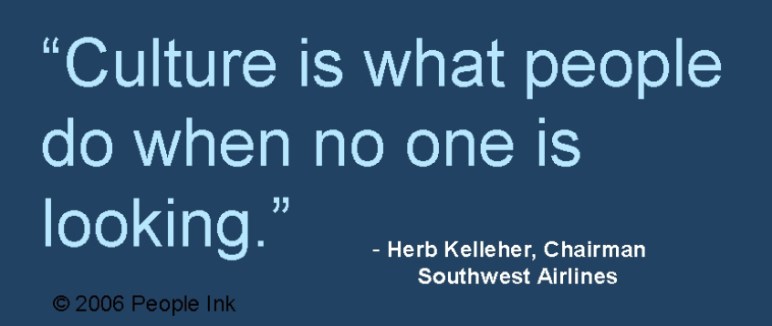
Every business has a culture. Usually the culture begins as an extension of the owner/founder.  The business takes on the personality of the founder; their attitudes, policies, actions and beliefs. As a company grows, these personality traits define the business and how it operates. These legacy actions etc. may actually be getting in the way of business performance.

What is “business culture” and how does it impact your business? In the words of anthropologist E.B. Tylor, culture is “that complex whole which includes knowledge, belief, art, morals, law, custom and any other capabilities and habits acquired by man as a member of society.” In more contemporary terms, culture is the beliefs, actions and behaviors that define how a company interacts with its employees, customers, suppliers and stakeholders.  Your organization’s culture is important because it directly reflects what the organization finds important and meaningful.

Unfortunately, when someone starts a business they usually do not make the time for long term strategic planning.  As a result, the organizations grows in a somewhat haphazard manner. The organizations policies and procedures evolve as situations arise and need to be dealt with.  Very few business owners or managers actually plan their growth (tough to do even in the best economic conditions) nor do they define their organizational culture. Employees then get hired as needed without consideration for how they fit into the culture.

The result is an organization with a haphazard set of actions, policies, beliefs and routines that may not communicate the true organizational vision.  For example; the business can’t claim they place an emphasis on good customer service while at the same time not providing employees with the resources necessary to  provide that service. This conflict between stated ideals and actual practices creates a conflict for employees and impacts how your customers view your business.

The start of any customer service improvement plan is to define your organization’s culture. How do you determine what your organizational culture looks like? Take a good look around your organization, observe employee interactions, look at how tasks are accomplished; what’s important and what isn’t. Take notes as you observe the day to day operation of your business. 

Inc. magazine columnist Geoffrey James has a great video on helping you to define your culture. Enjoy! https://www.inc.com/geoffrey-james/steer-corporate-culture.html

8 Steps To A Customer Service Improvement Plan

Ever wonder how companies like Southwest Airlines, Starbucks and REI consistently offer great customer service? Each of these organizations makes customer service an integral component of their business strategy! Every customer centric organization has a customer service improvement plan and a customer service improvement strategy.

There are 6 factors any business can implement to differentiate their business from that of their competitors. Customer Service is one of the factors. Differentiating your business sets your business apart from your competitors. You no longer need to compete on price alone. 

Here are 8 steps to create a Customer Service Improvement Plan to differentiate your organization:

  1. Define Your Culture
  2. Write Your Customer Service Vision Statement
  3. Spread The Word – Communicate The Vision
  4. Training
  5. Hiring
  6. Empowerment
  7. Leadership
  8. Celebrate

Over the next 4 weeks I will cover each of these 8 points in depth. Focusing on your customers by providing increased customer service will increase customer retention and grow your business.

For a free complimentary discovery session to determine how you can improve customer service, click the link: https://www.customerserviceimprovement.com/coaching

A Pending Disaster!

Customer Service Failures

Is there a pending Customer Service failure looming on your business horizon? Like the Titanic, is disaster just ahead, hidden and unforeseen? If you are unaware of the following disaster creating actions or worse, you tolerate them, there is a Customer Service Disaster in your future.

Here are three sure fire ways to a Customer Service Disaster:

  1. Smoke and Mirrors: You make unrealistic claims in your sales and marketing. You make promises you won’t keep just to get people in the door. No, a new suit won’t get you that promotion no matter how good you look in it. That new electronic gadget will not enhance your life and make you more popular. Reality sets in quickly.
  2. Keep it Zipped: Do you notify customers when shipments will be late? If an item they ordered is on back order? The color or size is not available for three weeks? Nobody, especially your customers, wants to be disappointed. When anyone expects their order to arrive on time and be correct your business looses credibility when it fails to deliver. This again is making promises you have no intention of fulfilling.
  3. Hear No Evil: When we as consumers are disappointed in a product or service we usually complain. Is your business listening? Failing to quickly respond to complaints, or worse yet ignoring them, sends a message to your customers: You are not important!

Any one of these issues will lead to reduced customer retention and a poor reputation. Two or all three of these actions will probably put you out of business!

Getting new customers is difficult and expensive, keeping existing customers is cheaper and more profitable. Review your marketing, communication and complaint handling to forestall a Customer Service Disaster.

For more information on improving your customer service visit: www.customerserviceimprovement.com

Customer Service vs Customer Care

We have all heard the terms customer service and customer care. In some instances they seem to be used interchangeably, as if they meant the same thing.  Well, they don’t. There is a big and not so subtle difference between the two concepts.

Customer service is designed to assist a customer in choosing a product or feature.  For example someone wishing to purchase a refrigerator may want to know the difference between a side-by-side and a standard refrigerator.  What features set them apart; ice maker, cold water dispensers, larger fruit and vegetable bins etc. 

Customer service usually includes the front line staff that address issues of product usage, product failings, service requests and complaints. Unfortunately in most companies customer service is only an after sales function.

Customer care is about fixing the customer. Taking the time to really listen carefully to address any and all issues, finding the right solution to meet their needs.  Making that all important follow up call. Customer care is also about developing a relationship with the customer, interacting with them on a more emotional level.

Blake Morgan in her Forbes article comparing customer service to customer care to customer experience states, “Customer service is a vital part of the entire experience—nearly 75% of customers who leave do so because they aren’t satisfied with customer service”.  Think about this fact and its impact on your business. With just a little training of your staff, you can improve customer satisfaction and customer retention. 

The Purpose of this Blog

Valhalla Business Solutions (VBS) exists to help business owners to grow and improve their businesses. Here you will find helpful information on all sorts of business activities: Improving Customer Service, Time Management, Strategic Planning and more.

I appreciate your comments, please keep them professional. If you have specific questions, email me at info@valhallabusinesssolutions.com

Thanks for reading.